
Silicon (Si): Definition, Structure, and Uses


Silicon (Si), with atomic number 14, is a chemical element classified as a metalloid and plays a central role in engineering, electronics, and industrial materials. Metallic and nonmetallic characteristics enable function as a semiconductor and as a structural material with controlled electrical conductivity. A stable crystal lattice ensures predictable physical behavior, while four valence electrons enable strong covalent bonding between atoms. High thermal stability supports performance in demanding environments, while brittle behavior limits flexibility but supports rigid structures. Structural variations define major semiconductor types, where doped crystalline silicon enables efficient electron flow through added charge carriers, monocrystalline silicon delivers high purity and strong performance, polycrystalline silicon offers lower cost with moderate efficiency, and amorphous silicon supports thin-film and flexible applications. Broad utility spans multiple industries through roles in electronic devices (microprocessors, transistors, integrated circuits), solar panels for energy conversion, silica and silicates for glass and ceramics for construction and manufacturing, and metal alloys (steel, aluminum) that improve strength and resistance.
What Is Silicon (Si)?
Silicon (Si) is a chemical element classified as a metalloid that is widely used in engineering and electronics. Silicon exhibits properties between metals and nonmetals, which allows it to function as a semiconductor with controlled electrical conductivity and stable structural characteristics. Silicon serves essential roles in semiconductors (microprocessors, integrated circuits) and metal alloys (steel, aluminum), while silica and silicates are used in industrial materials (glass, ceramics) to support modern technology and large-scale manufacturing systems.
Why Is Silicon Important in Mechanical and Electrical Engineering?
Silicon is important in mechanical and electrical engineering because it supports both structural and electronic applications. Silicon functions as a semiconductor in electrical engineering, where controlled conductivity enables the precise operation of electronic devices. Silicon functions as an alloying element in mechanical engineering, where it contributes to strength, oxidation resistance, and thermal stability in metals. Semiconductor applications rely on silicon in components (transistors, integrated circuits, sensors) that form the foundation of modern electronics. Mechanical applications rely on silicon in alloys (steel, aluminum) that improve durability and performance in industrial systems and high-temperature environments.
Is Silicon Considered a Critical Engineering Material?
Yes, silicon is considered a critical engineering material. Silicon serves as a foundational material in electronics, energy systems, and industrial production due to its semiconductive properties, structural stability, and wide availability. Modern technologies depend on silicon-based components (microprocessors, integrated circuits, solar cells), which support computing, communication, and energy generation across multiple industries.
What Are the Key Properties of Silicon as a Metalloid?
The Key Properties of Silicon as a Metalloid are listed below.
- Semiconductive Behavior: Silicon conducts electricity under controlled conditions, which allows precise regulation of electron flow in electronic devices.
- Intermediate Conductivity: Silicon has electrical conductivity between metals and nonmetals, which defines its classification among metalloids (or semimetals).
- Crystal Structure: Silicon forms a stable crystalline lattice, which supports predictable physical and electronic properties.
- Four Valence Electrons: Silicon has four valence electrons, which enable it to form strong covalent bonds with other elements.
- Brittleness: Silicon fractures under mechanical stress due to its rigid crystal structure.
- Thermal Stability: Silicon maintains structural integrity at high temperatures, which supports use in heat-intensive environments.
- Chemical Reactivity: Silicon reacts with oxygen to form silicon dioxide (SiO₂), which provides protective and insulating properties.
- Abundance in Nature: Silicon exists widely in Earth’s crust in the form of silica and silicates, which support large-scale industrial use.
- Oxide Layer Formation: Silicon forms a stable oxide layer that acts as an electrical insulator and surface protector.
- Versatile Bonding Capability: Silicon forms compounds with metals and nonmetals, which supports applications across electronics, construction, and chemical industries.
How Do the Electrical and Thermal Properties of Silicon Support Its Uses?
The electrical and thermal properties of silicon support its uses by enabling controlled conductivity and stable performance at elevated temperatures. Silicon allows precise control of electrical conductivity through doping, which regulates electron flow in semiconductor devices. Silicon maintains structural stability and resists degradation under high temperatures, which ensures consistent operation in demanding conditions. Controlled conductivity supports functionality in electronic components (transistors, integrated circuits, sensors), while thermal stability allows reliable performance in high-temperature environments (power electronics, automotive systems, industrial equipment).
Is Silicon Both Brittle and Semiconductive?
Yes, silicon is both brittle and semiconductive. Silicon has a rigid crystal structure that causes it to fracture under mechanical stress, which defines its brittle nature. Silicon conducts electricity under controlled conditions because its electron structure allows regulation of charge flow in response to external factors (voltage, temperature, doping). Brittleness limits use in load-bearing mechanical applications, while semiconductive behavior supports critical roles in electronics (microchips, transistors, sensors), where precise control of electrical conductivity is required.
"Some of the key benefits of silicon injection molding are the ability to produce medium- to high-volume parts with lower cycle times than compression molding and little to no flash to trim due to the use of flash rings, vent tracks, and runner systems. Silicon injection molding also offers the ability to mold around threaded inserts, eliminating a labor-intensive process after molding."
How Does the Atomic Structure of Silicon Influence Performance?
The atomic structure of silicon influences performance by forming a stable crystal lattice that governs electrical behavior. Silicon atoms arrange in a regular, repeating lattice where each atom shares electrons with four neighboring atoms, which creates a stable framework that allows controlled electron movement under applied conditions. Controlled electron movement within the crystal lattice determines semiconducting behavior, which enables precise switching and signal control in electronic devices (transistors, integrated circuits, sensors).
Why Do Valence Electrons Matter in Semiconductor Engineering?
Valence electrons matter in semiconductor engineering because they determine how atoms bond and conduct electricity. Valence electrons control the formation of covalent bonds in semiconductor materials and regulate the availability of charge carriers, which directly governs electron flow under applied voltage. Semiconductor design relies on precise control of valence electrons through doping (adding elements with different valence electron counts), which enables the creation of p-type and n-type regions that form the basis of electronic devices (transistors, diodes, integrated circuits).
Does Silicon Have Four Valence Electrons?
Yes, silicon has four valence electrons. Silicon belongs to Group 14 of the periodic table, which means each atom has four electrons in its outer shell that participate in bonding, allowing the formation of stable covalent bonds with neighboring atoms. Four valence electrons enable silicon to form a crystal lattice with shared electron pairs, creating an intrinsic semiconductor substrate whose electrical conductivity can be precisely controlled through doping, supporting functionality in electronic devices (transistors, integrated circuits, diodes).
How Is Silicon Used in Aluminum Alloys?
Silicon is used in aluminum alloys as an alloying element to improve casting performance and mechanical strength. Silicon increases fluidity in molten aluminum, which allows better mold filling during casting, and contributes to a refined microstructure that improves strength and wear resistance. Widespread use in automotive and industrial components (engine blocks, pistons, pump housings) results from improved casting behavior and stronger final structures that support durability and manufacturing effectiveness in aluminum alloys.
How Does Silicon Improve Strength and Castability in Aluminum?
Silicon improves strength and castability in aluminum by reducing the melting temperature and improving the flow of molten metal. Silicon lowers the melting range of aluminum alloys, which allows molten metal to fill molds more completely and uniformly. Improved fluidity leads to better casting quality and contributes to a more refined microstructure that increases strength. Reduced shrinkage and fewer casting defects result from silicon content, which produces stronger and more reliable aluminum components used in demanding applications (engine blocks, cylinder heads, transmission housings).
Is Silicon a Common Alloying Element in Aluminum?
Yes, silicon is a common alloying element in aluminum. Silicon improves key properties of aluminum by increasing fluidity during casting, reducing shrinkage, and contributing to strength and wear resistance. Many aluminum alloys (aluminum-silicon casting alloys, automotive engine components, structural parts) contain silicon because improved casting behavior and mechanical performance support efficient manufacturing and durable end-use applications.
What Role Does Silicon Play in Electrical Steel?
Silicon plays a critical role in electrical steel by improving efficiency and reducing energy loss. Silicon increases electrical resistivity, which limits eddy current losses, and improves magnetic properties by lessening hysteresis loss during repeated magnetization cycles. Electrical steel with silicon content delivers higher magnetic efficiency and lower heat generation, supporting dependable operation in transformers and electric motors, where energy conservation and performance stability are important in electrical steel.
How Does Silicon Affect Magnetic Properties in Steel?
Silicon affects magnetic properties in steel by increasing electrical resistance and reducing magnetic losses. Silicon raises the electrical resistivity of steel, which limits eddy current formation during magnetic cycling, and improves magnetic domain behavior, which reduces hysteresis loss. Reduced magnetic losses increase efficiency in electrical applications, which supports better performance in transformer cores, electric motors, and generators where consistent magnetic behavior is required.
Is Silicon Added to Reduce Energy Loss in Transformers?
Yes, silicon is added to reduce energy loss in transformers. Silicon is added to electrical steel to minimize hysteresis loss by improving magnetic domain behavior and to reduce eddy current loss by increasing electrical resistivity. Transformer cores made from silicon steel exhibit lower energy dissipation, increasing efficiency and reducing heat generation during continuous operation.
How Does Silicon Relate to Stainless Steel Grades Like 430?
Silicon relates to stainless steel grades like 430 through its role as a minor alloying element that supports material performance. Silicon is present in small amounts and improves oxidation resistance and contributes to strength. Silicon promotes the formation of stable oxide layers on the surface, which protect the metal during high-temperature exposure. Elevated-temperature conditions benefit from silicon content because protective layers reduce scaling and preserve structural integrity, which supports reliable performance in ferritic applications (appliance components, automotive trim, heat-resistant parts) used across Stainless Steel Grades.
"Having designed water treatment equipment based on UV LEDs, I have seen firsthand how critical it is to master the distinct roles of different forms of silicon: from the crystalline silicon substrate of the LED, to the high-purity silica of the optical windows, and the silicone used for flexible environmental seals. True design for manufacturability (DFM) relies on this precise material segregation to ensure that microscopic semiconductor efficiency coordinates seamlessly with macroscopic mechanical and sealing boundaries on the shop floor."
How Is Silicon Present in the Composition of 430 Stainless Steel?
Silicon is present as a minor alloying element in the composition of 430 stainless steel. 430 stainless steel contains silicon in small percentages (around 1.00% or lower), where it functions as a deoxidizer during steel production and supports stability in the alloy structure. Controlled silicon content contributes to improved oxidation resistance and elevated-temperature strength, supporting durability and surface stability in ferritic applications (appliances, automotive trim, heat-resistant components) of 430 Stainless Steel.
Does Silicon Improve Oxidation Resistance in Stainless Steel?
Yes, silicon improves oxidation resistance in stainless steel. Silicon promotes the formation of a stable oxide layer on the steel surface at elevated temperatures, which acts as a barrier against oxygen diffusion. Protective oxide layers reduce surface degradation and slow scaling during high-temperature exposure, which extends the service life of stainless steel components used in heat-intensive environments (industrial furnaces, automotive exhaust systems, heat exchangers).
What Are the Main Types of Silicon (Si)?
The Main Types of Silicon (Si) are listed below.
- Crystalline Silicon: Crystalline silicon contains an ordered atomic lattice that, when properly doped, supports efficient electron flow in high-performance electronic devices.
- Monocrystalline Silicon: Monocrystalline silicon consists of a single, continuous crystal structure, providing maximum purity and superior electrical performance in semiconductors and solar cells.
- Polycrystalline Silicon: Polycrystalline silicon consists of multiple crystal grains, reducing production costs while maintaining acceptable efficiency for solar panels and electronics.
- Amorphous Silicon: Amorphous silicon lacks a defined crystal structure, which allows flexible and thin-film applications despite lower electrical efficiency.
- Silicon Compounds: Silicon compounds (silica, silicones, silicates) serve construction, chemical, and industrial uses due to stability and versatility.
What Is the Difference Between Crystalline and Amorphous Silicon?
The difference between Crystalline and Amorphous Silicon lies in atomic structure and resulting electrical performance. Doped crystalline silicon contains a highly ordered lattice that supports efficient electron movement and consistent conductivity in electronic devices. Amorphous silicon lacks a defined atomic pattern, which reduces electron mobility and limits electrical efficiency. Crystalline silicon supports high-performance applications (microprocessors, power transistors, integrated circuits) because predictable electron flow enables faster switching and lower energy loss. Amorphous silicon serves thin-film and flexible technologies (solar cells, LCD panels, wearable electronic displays) because its disordered structure allows deposition on varied surfaces despite reduced electrical performance.
Is Crystalline Silicon More Efficient for Electronic Devices?
Yes, crystalline silicon is more efficient for electronic devices. Crystalline silicon contains a highly ordered atomic structure that allows electrons to move with lower resistance, which improves electrical conductivity and switching performance in semiconductor components. High-performance electronic devices (microprocessors, memory chips, power transistors) rely on crystalline silicon wafers because consistent crystal alignment supports predictable electrical behavior and high reliability in circuit operation.
What Are the Uses of Silicon (Si)?
The uses of Silicon (Si) are listed below.
- Silicon for Semiconductors and Microchips: Silicon functions as a semiconductor material that enables controlled electrical conductivity, which supports the operation of microprocessors, integrated circuits, and transistors in electronic systems.
- Silicon for Solar Cells and Panels: Silicon converts sunlight into electrical energy through photovoltaic processes, which allows efficient power generation in solar panels used in renewable energy systems.
- Silicon for Glass and Construction Materials: Silicon compounds (silica) serve as the primary component in glass and contribute to the production of construction materials (cement, concrete), which provide strength and durability in infrastructure.
- Silicon for Metal Alloys and Steel Production: Silicon acts as an alloying element in metals (steel, aluminum), where it improves strength, oxidation resistance, and casting performance during manufacturing.
- Silicon for Silicone Products and Sealants: Silicon forms the basis of silicone materials used in sealants, adhesives, lubricants, and medical products, where flexibility, chemical stability, and resistance to temperature variation are required.
- Silicon for Semiconductors and Microchips
Silicon is used in semiconductors and microchips because it provides controlled electrical conductivity that enables precise regulation of electron flow. A crystalline structure allows consistent and predictable movement of charge carriers, which supports reliable switching and signal processing in electronic circuits. Doping with specific elements introduces free electrons or holes, which create n-type and p-type regions required for transistor operation. Integration of silicon into microchips supports the fabrication of complex components (microprocessors, memory chips, integrated circuits) that perform computation, data storage, and communication tasks. Stability, abundance, and compatibility with manufacturing processes make silicon the primary material for modern electronic devices.
Silicon for Solar Cells and Panels
Silicon is used in solar cells and panels because it converts sunlight into electrical energy through the photovoltaic effect. A crystalline structure allows efficient absorption of light and generation of charge carriers, which produce an electric current when exposed to sunlight. Doping creates p-type and n-type layers that form a junction, which enables the separation and movement of electrons to generate usable electricity. High stability and resistance to environmental conditions support long-term performance in outdoor installations. Widespread availability and proven efficiency make silicon the dominant material in solar energy systems (residential panels, commercial arrays, utility-scale installations).
Silicon for Glass and Construction Materials
Silica and silicates are used in glass and construction materials because they form strong and stable structures that provide durability and structural integrity. Silica (SiO₂), a naturally occurring compound of silicon and oxygen, serves as the primary component in glass production, where high melting temperature and chemical stability ensure resistance to heat and environmental degradation. Construction materials (cement, concrete, bricks) rely on silicon-based compounds to improve strength, hardness, and resistance to weathering. Bonding characteristics of silicon compounds create dense and durable structures that support long-term performance in buildings and infrastructure. Wide availability and compatibility with large-scale manufacturing make silica and silicates essential in construction applications (windows, structural materials, insulation products).
Silicon for Metal Alloys and Steel Production
Silicon is used in metal alloys and steel production because it improves strength, stability, and resistance to oxidation during processing and service. The addition of silicon to molten metal acts as a deoxidizer, which removes dissolved oxygen and prevents defects in the final structure. Increased strength and hardness result from solid solution effects, which improve mechanical performance in alloys (steel, aluminum). Oxidation resistance at high temperatures is improved because silicon promotes the formation of protective oxide layers on the metal surface. Consistent material quality and improved durability make silicon essential in alloy systems used for industrial components (structural steel, automotive parts, machinery).
Silicon for Silicone Products and Sealants
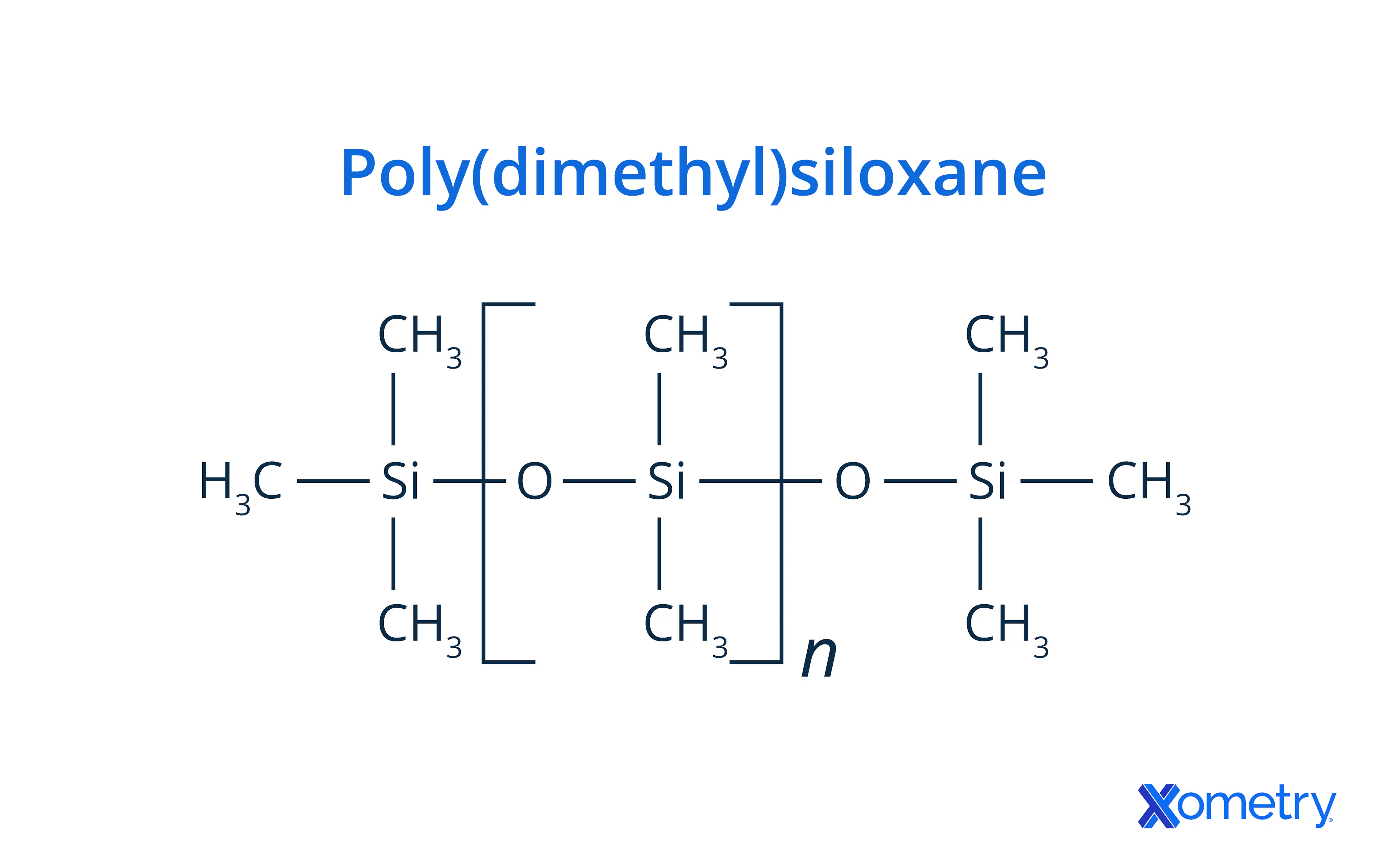
Silicon is used in silicone products and sealants because it forms flexible and stable polymer structures that perform under a wide range of conditions. Silicone materials derived from silicon exhibit resistance to heat, moisture, and chemical exposure, which allows reliable sealing and bonding in demanding environments. Elasticity and durability support long-term performance without cracking or degradation, which is critical in construction, automotive, and industrial applications. Electrical insulation properties make silicone suitable for use in electronic components, while biocompatibility supports use in medical products. Versatile performance characteristics make silicone-based materials essential for applications (sealants, adhesives, lubricants, coatings) that require flexibility and environmental resistance.
What Are the Advantages of Using Silicon (Si)
The advantages of using Silicon (Si) are listed below.
- Semiconductor Capability: Silicon controls electrical conductivity under specific conditions, which supports precise switching and signal processing in electronic circuits.
- Abundant Availability: Earth’s crust contains large quantities of silicon in the form of silica (SiO₂), which ensures a stable supply for industrial use.
- Thermal Stability: Silicon maintains mechanical integrity at high temperatures, though its electronic reliability in semiconductor components is typically limited to operating temperatures below 150 °C.
- Oxide Layer Formation: Silicon forms a stable silicon dioxide (SiO₂) layer, which acts as an insulating barrier in microchips and protects surfaces from contamination.
- Mechanical Strength: Crystalline silicon provides sufficient hardness and durability for wafers used in semiconductor manufacturing.
- Compatibility with Manufacturing Processes: Silicon integrates well with existing fabrication techniques (photolithography, doping, etching), which supports large-scale chip production.
- Energy Conversion Efficiency: Silicon converts sunlight into electricity efficiently, making it suitable for solar panels.
- Cost Efficiency: Widespread availability and mature processing methods reduce production costs compared to alternative semiconductor materials.
- Chemical Stability: Silicon resists corrosion under many environmental conditions, which extends the lifespan of devices and structures.
- Versatility in Applications: Silicon and its compounds serve multiple industries, where elemental silicon is utilized in electronics and energy systems, while silica and silicates are fundamental to the construction industry.
Disclaimer
The content appearing on this webpage is for informational purposes only. Xometry makes no representation or warranty of any kind, be it expressed or implied, as to the accuracy, completeness, or validity of the information. Any performance parameters, geometric tolerances, specific design features, quality and types of materials, or processes should not be inferred to represent what will be delivered by third-party suppliers or manufacturers through Xometry’s network. Buyers seeking quotes for parts are responsible for defining the specific requirements for those parts. Please refer to our terms and conditions for more information.