
316 Stainless Steel: Composition and Density


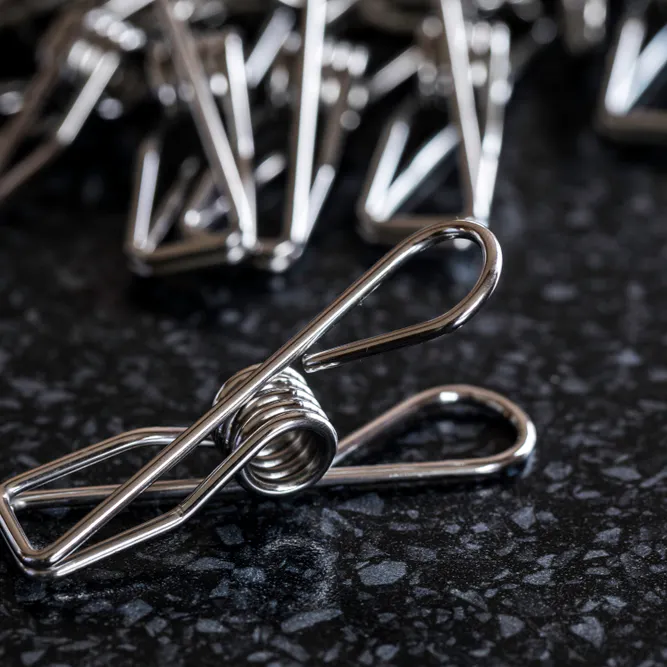
316 Stainless Steel is an austenitic stainless steel alloy recognized for its exceptional corrosion resistance, mechanical strength, and long-term durability across demanding industrial environments. 316 Stainless Steel belongs to the 300 series of stainless steels, distinguished by its inclusion of molybdenum, which sets it apart from standard grades. The alloy delivers reliable performance in marine, chemical processing, and medical applications where exposure to moisture, acids, and harsh chemicals is constant.
Stainless steel, as a material category, earns its widespread adoption through a combination of structural strength, aesthetic appeal, and oxidation resistance. The 316 grade modifies the standard austenitic stainless steel composition through elemental addition, including 16% to 18% chromium, 10% to 14% nickel, and 2% to 3% molybdenum. The density of 316 stainless steel measures approximately 7,990 kg/m³ (0.289 lb/in³), making it a reliable and structurally sound material for load-bearing and precision components. The mechanical integrity and chemical stability of the alloy support its reputation as a premier grade within the stainless steel family, referenced extensively in manufacturing platforms such as Xometry for sourcing and machining applications.
What Is 316 Stainless Steel?
316 stainless steel is an austenitic stainless steel alloy recognized for its superior corrosion resistance, mechanical durability, and stable performance under chemically aggressive conditions. The alloy falls within the austenitic family of stainless steels, characterized by a face-centered cubic crystal structure that contributes to its non-magnetic nature and excellent ductility. Chromium (Cr), nickel (Ni), and molybdenum (Mo) form the three primary alloying elements that define the grade's performance profile. Chromium content ranging from 16% to 18% forms a passive oxide layer on the surface, preventing oxidation and rust formation. Nickel content (10% to 14%) stabilizes the austenitic structure and improves formability, while molybdenum (2% to 3%) significantly enhances resistance to pitting and crevice corrosion in chloride-rich environments. Marine engineering, chemical processing, and medical device manufacturing rely on 316 stainless steel for components exposed to saltwater, acidic solutions, and sterilization cycles. The grade withstands temperatures up to 870°C (1598°F) in intermittent service and up to 925°C (1697°F) in continuous service, reinforcing its suitability for high-temperature industrial processes.
Why Is Stainless Steel Widely Used?
Stainless steel is widely used and earns widespread adoption across industries due to its inherent resistance to corrosion, structural strength, and low maintenance requirements. The passive chromium oxide layer that forms on the surface acts as a self-repairing barrier against rust, moisture, and chemical attack, reducing the need for coatings or treatments. A tensile strength ranging from 515 MPa to 620 MPa (74,700 psi to 89,900 psi) makes stainless steel suitable for load-bearing and high-stress applications in construction, aerospace, and manufacturing. The material maintains its mechanical integrity across a wide temperature range, from cryogenic conditions to elevated heat environments exceeding 800°C (1472°F). Food processing, medical equipment, and architectural projects benefit from its smooth, non-porous surface that resists bacterial growth and meets hygiene standards. The material's aesthetic finish, available in brushed, mirror-polished, or matte forms, meets both functional and visual requirements in consumer and commercial products. A long service life paired with minimal upkeep costs positions stainless steel as a cost-effective material choice across construction, energy, and manufacturing sectors.
What Does 316 Stainless Steel Mean in Material Grading?
316 Stainless Steel means in material grading a high-performance, corrosion-resistant alloy, primarily composed of chromium, nickel, and molybdenum. The designation "316" refers to a specific classification within the Society of Automotive Engineers (SAE) and American Iron and Steel Institute (AISI) stainless steel grading system. The 300 series classification identifies a group of austenitic stainless steels alloyed primarily with chromium and nickel, and the number 316 specifies a distinct composition within that group. The defining characteristic of the 316 grade is the intentional addition of molybdenum at a concentration from 2% to 3%, which elevates the alloy's resistance to pitting corrosion in chloride and sulfide-rich environments. The grading system communicates composition standards, mechanical expectations, and processing requirements that manufacturers and engineers rely on when selecting materials for specific applications. Standards bodies, including ASTM International (ASTM A240) and the International Organization for Standardization (ISO 15510), formally recognize and define the 316 grade, ensuring consistency in material properties across global supply chains. The grade belongs to the austenitic stainless steel family, which accounts for the largest share of stainless steel production globally.
Is 316 Stainless Steel Considered a Corrosion Resistant Alloy?
Yes, 316 stainless steel is considered a corrosion-resistant alloy due to its elemental composition that actively inhibits oxidation and chemical degradation. The chromium content (16% to 18%) forms a stable, self-renewing passive oxide film on the surface, preventing rust formation even when exposed to moisture and atmospheric oxygen. Molybdenum (2% to 3%) enhances the alloy's resistance to pitting and crevice corrosion, particularly in environments containing chloride ions, such as seawater and deicing salts. The nickel content (10% to 14%) stabilizes the austenitic phase and contributes to the alloy's general resistance to acidic and alkaline solutions. Testing under ASTM G48 (Standard Test Methods for Pitting and Crevice Corrosion Resistance) confirms 316 stainless steel's superior performance compared to non-molybdenum grades in aggressive chemical environments. Marine hardware, chemical storage tanks, and pharmaceutical equipment take advantage of the alloy's resistance properties in applications where an alloy metal with reliable anti-corrosion characteristics is required.
What Is the Chemical Composition of 316 Stainless Steel?
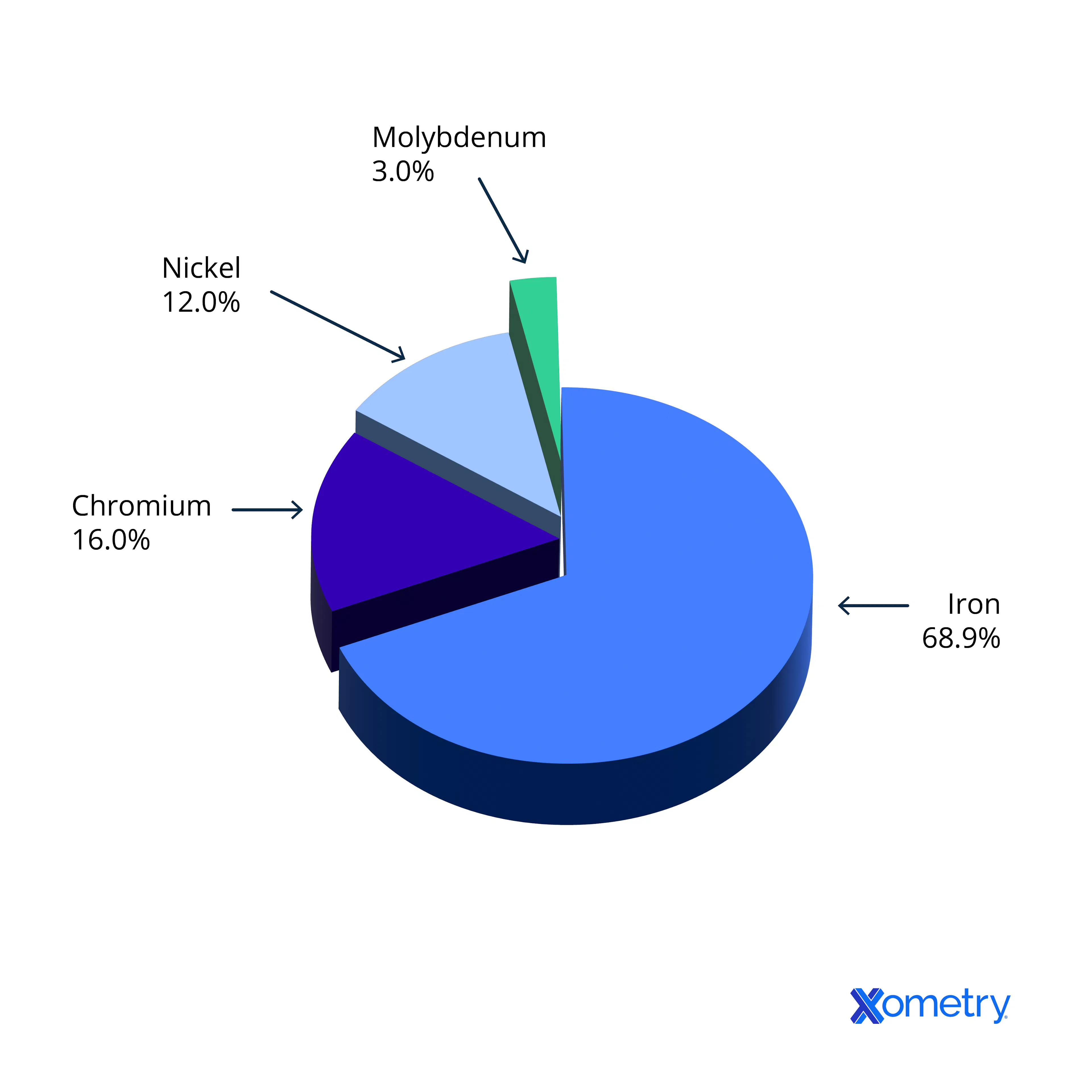
The chemical composition of 316 stainless steel is of iron (Fe) as its base element, supplemented by chromium (Cr), nickel (Ni), and molybdenum (Mo) as the principal alloying elements that define its corrosion resistance and mechanical performance. Chromium content (16% to 18%) generates a passive oxide surface layer that acts as a chemical barrier against rust and oxidation, while molybdenum (2% to 3%) provides targeted protection against pitting and crevice corrosion in chloride environments. Nickel (10% to 14%) stabilizes the austenitic crystal structure and improves ductility and toughness across a wide temperature range. Secondary elements, including carbon (C), manganese (Mn), silicon (Si), phosphorus (P), and sulfur (S), appear in controlled trace quantities that refine the alloy's machinability, weldability, and structural consistency. Carbon content is kept at or below 0.08% to minimize carbide precipitation during welding, a property critical to maintaining corrosion resistance in heat-affected zones. The combined elemental balance ensures 316 stainless steel meets the compositional requirements defined under ASTM A240 and AISI standards, confirming its suitability for high-performance industrial use.
A pie chart displaying the chemical composition of 316 stainless steel.
What Elements Are Included in 316 Stainless Steel Composition?
The elements included in the 316 stainless steel composition are listed below.
- Iron (Fe): Iron is the base element of 316 stainless steel, comprising the majority of the alloy's composition, typically above 60% by weight. It provides the foundational metallic matrix into which all other alloying elements are dissolved. Iron (Fe) structural properties form the backbone of the alloy's mechanical strength.
- Chromium (Cr): Chromium is present at 16% to 18% and is responsible for the formation of a passive chromium oxide (Cr₂O₃) layer on the alloy's surface. The passive layer acts as a self-repairing barrier against oxidation and corrosion. Chromium (Cr) is the element that qualifies the alloy as "stainless."
- Nickel (Ni): Nickel content ranges from 10% to 14% and stabilizes the austenitic crystal structure at room temperature and below. The element enhances the alloy's ductility, toughness, and resistance to acidic environments. Nickel contributes to the non-magnetic character of 316 stainless steel.
- Molybdenum (Mo): Molybdenum is added at 2% to 3% and is the defining alloying element that differentiates 316 from the 304 grade. The element strengthens the passive oxide film against breakdown in chloride and sulfide-rich environments. Molybdenum directly improves resistance to pitting and crevice corrosion in marine and chemical processing applications.
- Manganese (Mn): Manganese is included at a maximum of 2% and serves as a deoxidizer during the steelmaking process. The element improves hot workability and contributes to austenite stability. Manganese helps stabilize the austenitic phase of the steel, ensuring uniformity in the material's microstructure.
- Silicon (Si): Silicon content is limited to a maximum of 0.75% and acts as a deoxidizer during melting and casting. The element improves oxidation resistance at elevated temperatures and contributes to fluidity during casting. Silicon is chemically distinct from silicone polymers, a difference detailed in resources covering Silicone.
- Carbon (C): Carbon is controlled at a maximum of 0.08% in standard 316 stainless steel to prevent sensitization during welding. Excess carbon reacts with chromium at grain boundaries to form chromium carbides, which depletes corrosion resistance in heat-affected zones. Keeping carbon content low is a primary factor in maintaining the alloy's structural and chemical integrity after fabrication.
- Phosphorus (P): Phosphorus is present at a maximum of 0.045% and is treated as a residual impurity in stainless steel production. Particularly at low temperatures, elevated concentrations of phosphorus embrittle the alloy and reduce toughness. Strict control of phosphorus content is maintained to meet ASTM A240 compositional standards.
- Sulfur (S): Sulfur is limited to a maximum of 0.03% and is considered a tramp element in standard 316 stainless steel grades. The presence of sulfur at higher levels reduces corrosion resistance by promoting the formation of manganese sulfide inclusions. Sulfur content is deliberately minimized to preserve the alloy's resistance to pitting and intergranular corrosion.
1. Iron (Fe)
Iron is the base metal in 316 stainless steel, constituting the majority of its mass. It provides the structural foundation of the alloy and determines its basic mechanical characteristics, including density and magnetic response in deformed states. In pure form, iron is highly reactive and prone to oxidation, but when combined with chromium and other alloying elements in 316 stainless steel, the resulting alloy becomes resistant to rust and environmental degradation. Iron is found across structural components in construction (beams, fasteners, and framing systems), where it serves as the backbone of ferrous and stainless steel manufacturing, as in products covered under Iron (Fe).
2. Chromium (Cr)
Chromium is present in 316 stainless steel at a concentration of 16% to 18% and is the element responsible for the alloy's corrosion resistance. The element reacts with oxygen to form a thin, stable chromium oxide (Cr₂O₃) layer on the surface, which acts as a passive barrier against rust and chemical attack. The layer self-repairs when damaged in the presence of oxygen, maintaining the alloy's protective function over time. Chromium is applied across industrial environments (chemical reactors, coastal infrastructure, and medical devices) where persistent corrosion protection is required, as seen in products involving Chromium (Cr).
3. Nickel (Ni)
Nickel is included in 316 stainless steel at 10% to 14% and stabilizes the austenitic face-centered cubic crystal structure at room and elevated temperatures. The element improves the alloy's ductility, toughness, and resistance to impact loading, making the material formable without cracking during machining or fabrication. Nickel also enhances resistance to reducing acids (sulfuric and hydrochloric acids at moderate concentrations) and contributes to the material's performance in cryogenic environments. Industries relying on Nickel (Ni) in 316 stainless steel include aerospace, medical device manufacturing, and food processing, where material integrity at varied temperatures is a manufacturing requirement.
4. Molybdenum (Mo)
Molybdenum is present at 2% to 3% in 316 stainless steel and is the key differentiator from the 304 grade. The element strengthens resistance to pitting and crevice corrosion in chloride environments, including seawater, brine, and chlorinated industrial fluids. Molybdenum also improves elevated temperature strength and resistance to creep, which refers to slow deformation under sustained stress at high temperatures. The element's contribution is measurable in marine hardware, pharmaceutical manufacturing equipment, and chemical processing tanks, where exposure to aggressive chemicals demands long-term material stability. Products covered under Molybdenum (Mo) reflect the grade's suitability for corrosion-critical and high-temperature service environments.
5. Manganese (Mn)
Manganese is present in 316 stainless steel at a maximum concentration of 2% and serves as a deoxidizer during steelmaking, removing oxygen from the melt to prevent porosity in the final product. The element improves hot workability, allowing the alloy to be processed and shaped at elevated temperatures without cracking or surface defects. Manganese also contributes to hardness and tensile strength, supporting the alloy's structural performance. It partially substitutes for nickel in stabilizing the austenitic phase at a lower cost. It makes Manganese (Mn) an essential element in enhancing the alloy's performance.
6. Silicon (Si)
Silicon is included in 316 stainless steel at a maximum of 1% and acts as a deoxidizer in the steel melt, reducing the presence of oxygen-related defects during casting and solidification. The element improves fluidity during casting and contributes to the alloy's resistance to oxidation at elevated temperatures, which is relevant in high-heat industrial processes. Silicon also provides minor strengthening effects through solid solution hardening. Silicon functions differently as a primary material in electronic and semiconductor manufacturing, but in stainless steel alloys, the element supports processing performance and thermal stability, making Silicon (Si) an important component in maintaining the alloy's durability under high-temperature conditions.
7. Carbon (C)
Carbon is present in standard 316 stainless steel at a maximum of 0.08% and plays a role in determining hardness and tensile strength through its interaction with iron and other alloying elements. At low concentrations, carbon contributes to the alloy's strength without significantly compromising ductility. At elevated levels, carbon reacts with chromium at grain boundaries during welding, forming chromium carbides that deplete the passive layer and reduce corrosion resistance, a process called sensitization. Controlling carbon content to within specified limits preserves the performance of the alloy in welded assemblies and heat-affected zones, as addressed in products involving Carbon (C).
8. Phosphorus (P)
Phosphorus is restricted to a maximum of 0.045% in 316 stainless steel and is treated as a trace impurity rather than an intentional alloying element. At controlled levels, phosphorus improves machinability and strength. At elevated concentrations, phosphorus causes embrittlement, particularly at grain boundaries, which reduces toughness and fatigue resistance in service. The element segregates to grain boundaries during solidification, weakening intergranular bonds under mechanical or thermal stress. Strict compositional control during steelmaking keeps phosphorus within allowable limits to preserve the alloy's mechanical performance. Quality control processes governing Phosphorus (P) levels are part of standard stainless steel production specifications under ASTM A240 and EN 10088.
9. Sulfur (S)
Sulfur is present in 316 stainless steel at a maximum of 0.03% and is controlled strictly due to its negative effects on corrosion resistance and ductility. At elevated concentrations, sulfur forms manganese sulfide (MnS) inclusions within the steel matrix, acting as initiation sites for pitting corrosion and reducing resistance in chloride environments. The element is intentionally kept at trace levels to preserve the alloy's corrosion performance. In free-machining stainless steel grades, sulfur is added deliberately at higher levels to improve chip formation during machining. Minimizing Sulfur (S) content remains a defined requirement in ASTM and ISO material specifications for standard 316 applications.
316 stainless steel is valuable because it enhances performance through targeted alloying chemistry rather than simply increasing strength. Chromium provides the passive oxide layer that gives stainless steel its baseline corrosion resistance, but the addition of 2% to 3% molybdenum is what makes 316 especially effective in chloride-rich environments where pitting and crevice corrosion are the main failure mechanisms. Nickel stabilizes the austenitic structure, giving the alloy high ductility, toughness, and formability, while a low, controlled carbon content helps preserve corrosion resistance during welding. This makes 316 a practical engineering choice where material failure is more likely to come from localized corrosion, cleaning chemicals, seawater, or heat-affected zones than from basic structural overload.
How Does 316L Stainless Steel Differ in Composition to 316 Stainless Steel?
316L stainless steel differs in composition from standard 316 primarily in its carbon content, with the "L" designation specifically indicating a low-carbon variant engineered to address sensitization issues that arise during welding and high-temperature processing. Standard 316 stainless steel permits a carbon concentration of up to 0.08%, while 316L limits carbon to a maximum of 0.03%, reducing the risk of chromium carbide precipitation at grain boundaries during thermal exposure. The reduction in carbon content preserves the chromium concentration near grain boundaries, maintaining the integrity of the passive oxide layer that provides corrosion resistance in welded or heat-affected zones. All other alloying elements, including chromium (16% to 18%), nickel (10% to 14%), and molybdenum (2% to 3%), remain consistent across the two grades, meaning their performance in non-welded applications is comparable. The 316L grade meets ASTM A240 and ASTM A276 standards for low-carbon stainless steel sheet, plate, and bar stock, confirming its formal recognition as a distinct but closely related variant.
What Is the Difference Between 316 and 316L Stainless Steel Composition?
The compositional difference from 316 to 316L stainless steel is the maximum allowable carbon content, where standard 316 permits up to 0.08% carbon, while 316L restricts carbon to 0.03% or below. Lower carbon content in 316L directly addresses the phenomenon of sensitization, which occurs when carbon reacts with chromium at grain boundaries during welding or heat treatment, forming chromium carbide and depleting corrosion resistance in affected areas. The remaining alloying elements, including chromium (16% to 18%), nickel (10% to 14%), and molybdenum (2% to 3%), remain effectively unchanged from 316 to 316L stainless steel, making the two grades mechanically similar in non-welded conditions. Post-weld heat treatment, which restores corrosion resistance in standard 316 by dissolving chromium carbides, is unnecessary with 316L due to its inherently low carbon composition. Industries requiring extensive welding, such as pharmaceutical manufacturing, food processing, and marine fabrication, prefer 316L stainless steel to eliminate the need for post-fabrication heat treatment while maintaining equivalent corrosion resistance.
Does 316L Have Lower Carbon Content Than Standard 316?
Yes, 316L has lower carbon content than standard 316 stainless steel, with the maximum carbon concentration capped at 0.03% compared to 0.08% in the standard grade. The designation "L" explicitly communicates the low-carbon specification to engineers, fabricators, and material procurement teams selecting alloys for welded or thermally processed applications. Carbide precipitation, the primary metallurgical concern in welded stainless steel, occurs when carbon migrates to grain boundaries and combines with chromium at temperatures from 425°C to 850°C (797°F to 1562°F), a range commonly encountered during welding. The reduced carbon level in 316L minimizes the availability of carbon for carbide formation, preserving the chromium concentration throughout the microstructure and sustaining corrosion resistance across weld seams and heat-affected zones. ASTM A240 formally specifies the 0.03% maximum carbon threshold for 316L, ensuring material traceability and compositional compliance across the supply chain.
What Is the Density of 316 Stainless Steel?
The density of 316 stainless steel measures approximately 7,990 kg/m³ (0.289 lb/in³), a value consistent with the austenitic stainless steel family's characteristic mass-to-volume relationship. The density figure is derived from the alloy's elemental composition, where iron, chromium, nickel, and molybdenum contribute their individual atomic masses to the overall material density. At 7,990 kg/m³, 316 stainless steel is denser than aluminum (2,700 kg/m³) but comparable to other austenitic steel grades, making weight calculations straightforward for structural and mechanical design. Engineers and fabricators use density values to calculate the mass of components, determine material costs by weight, and assess load requirements for structural assemblies. Density remains effectively constant across standard temperature ranges encountered in most industrial applications, though slight variations from 7,900 kg/m³ to 8,000 kg/m³ appear across published material data sheets depending on the precise elemental balance of a given heat. The density of 316 stainless steel directly influences decisions in marine, chemical, and medical equipment design, where weight, strength, and material volume are balanced against performance requirements.
How Is the Density of 316 Stainless Steel Measured in kg/m³?
The density of 316 stainless steel is determined by calculating the ratio of the material's mass to its volume, expressed in kilograms per cubic meter (kg/m³). The standard formula applied is: Density (ρ) = Mass (m) / Volume (V), where mass is measured in kilograms and volume in cubic meters. Laboratory measurement methods include Archimedes' principle, where a precisely weighed sample is submerged in water, and the displaced volume is recorded to calculate density with high accuracy. Gas pycnometry offers an alternative approach, using inert gas displacement to determine the true volume of irregularly shaped samples without surface absorption errors. ASTM E252 and ISO 1183-1 provide standardized testing protocols applicable to metallic materials, ensuring consistency and reproducibility across different testing facilities. Published density values for 316 stainless steel from material suppliers and standards bodies reflect measurements taken at room temperature (20°C or 68°F), with corrections applied for thermal expansion at elevated service temperatures.
Is the Density of 316 Stainless Steel Close to Other Austenitic Grades?
Yes, the density of 316 stainless steel is close to that of other austenitic grades, with values across the 300 series family ranging from approximately 7,900 kg/m³ to 8,030 kg/m³ depending on the specific grade and composition. The 304 grade, the most widely used austenitic stainless steel, carries a density of approximately 7,930 kg/m³, placing it within 60 kg/m³ of the 316 grade's 7,990 kg/m³. The narrow density range across austenitic grades reflects their shared compositional foundation of iron, chromium, and nickel, with the minor additions of molybdenum or other elements producing marginal increases in mass per unit volume. Grades such as 316L, 317, and 321 all fall within this same density band, meaning that substituting one austenitic grade for another in a design carries negligible impact on component weight calculations. The face-centered cubic crystal structure common to all austenitic stainless steels results in an atomic packing factor of 0.74, contributing to the consistently dense and compact microstructure observed across the grade family.
What Are the Mechanical Properties of 316 Stainless Steel?
The mechanical properties of 316 stainless steel.
- Tensile Strength: The ultimate tensile strength of 316 stainless steel ranges from 515 MPa to 620 MPa (74,700 psi to 89,900 psi) in the annealed condition. The value indicates the maximum stress the alloy withstands before fracture under uniaxial loading. The tensile strength makes 316 stainless steel suitable for structural components, pressure vessels, and load-bearing fasteners.
- Yield Strength: Yield strength for 316 stainless steel in the annealed state measures approximately 205 MPa to 310 MPa (29,700 psi to 44,900 psi). The yield strength defines the stress at which the material transitions from elastic to plastic deformation. Applications requiring dimensional stability under load, such as medical implants and pump shafts, depend on the yield strength specification.
- Elongation at Break: The elongation at break for 316 stainless steel reaches 40% to 50% in the annealed condition, indicating high ductility and the ability to deform significantly before fracture. The high elongation value reflects the austenitic microstructure's capacity to absorb deformation energy without cracking. Forming operations (deep drawing, roll forming, and stamping) take advantage of the alloy's ductility.
- Elastic Modulus: The modulus of elasticity (Young's modulus) for 316 stainless steel measures approximately 193 GPa (28,000 ksi). The value quantifies the alloy's stiffness and its resistance to elastic deformation under applied stress. Engineers apply the elastic modulus in structural calculations to predict deflection and stress distribution in components.
- Hardness: The Brinell hardness of 316 stainless steel in the annealed condition measures approximately 149 HB to 217 HB, with a Rockwell B hardness of 79 HRB to 95 HRB. Hardness reflects the material's resistance to surface indentation and localized plastic deformation. Cold working increases hardness significantly, with heavily worked 316 stainless steel reaching values above 300 HB.
- Impact Toughness: 316 stainless steel retains high impact toughness at cryogenic temperatures, with Charpy impact values exceeding 100 J (74 ft-lb) at temperatures as low as -196°C (-321°F). The austenitic crystal structure prevents the ductile-to-brittle transition observed in ferritic and martensitic steel grades at low temperatures. Cryogenic storage vessels and liquefied natural gas equipment take advantage of the alloy's low-temperature impact resistance.
- Fatigue Strength: The fatigue strength of 316 stainless steel in the annealed condition measures approximately 210 MPa to 270 MPa (30,000 psi to 39,000 psi) at 10⁷ cycles. The fatigue limit is relevant for components subjected to cyclic loading, such as rotating shafts, springs, and vibrating structural members. Surface finish and the presence of stress concentrations significantly influence the achieved fatigue life.
What Are the Hardness and Yield Strength of 316 Stainless Steel?
The hardness and yield strength of 316 stainless steel.
- Brinell Hardness (HB): The Brinell hardness of annealed 316 stainless steel ranges from 149 HB to 217 HB, measured using a 10 mm hardened steel or carbide ball under a 3000 kg load per ASTM E10. The hardness value reflects the alloy's resistance to permanent surface indentation under concentrated load. Cold-worked 316 stainless steel reaches hardness values above 300 HB, depending on the degree of work hardening applied.
- Rockwell Hardness (HRB): Rockwell B hardness for annealed 316 stainless steel measures approximately 79 HRB to 95 HRB, tested with a 1/16 inch ball indenter under a 100 kg load per ASTM E18. The Rockwell scale provides a faster, non-destructive hardness assessment compared to Brinell testing. Production environments use Rockwell hardness testing for quality control of sheet, plate, and bar stock.
- Vickers Hardness (HV): The Vickers hardness of 316 stainless steel in the annealed condition falls from 150 HV to 220 HV, using a pyramidal diamond indenter under loads from 1 kgf to 120 kgf per ASTM E92. Vickers testing provides consistent results across both soft and hard materials and is preferred for thin sections and surface layers. The method supports hardness mapping across weld zones and heat-affected areas.
- Yield Strength (0.2% Offset): The 0.2% offset yield strength of annealed 316 stainless steel ranges from 205 MPa to 310 MPa (29,700 psi to 44,900 psi), representing the stress at which the material exhibits 0.2% permanent strain. The yield strength determines the load capacity of structural components before permanent deformation occurs. Cold working increases the yield strength dramatically, reaching values above 700 MPa (101,500 psi) at high deformation levels.
- Proof Strength (Rp0.2): Proof strength at 0.2% strain for 316 stainless steel at elevated temperatures decreases progressively, dropping from 205 MPa at 20°C (68°F) to approximately 120 MPa at 400°C (752°F). The reduction in proof strength at elevated temperatures governs the design of pressure vessels and heat exchangers operating at high service temperatures. ASME Boiler and Pressure Vessel Code (Section II, Part D) provides allowable stress values for 316 stainless steel across a range of temperatures.
Is 316 Stainless Steel Strong Enough for Structural Use?
Yes, 316 stainless steel is strong enough for a wide range of structural applications, with a tensile strength from 515 MPa to 620 MPa (74,700 psi to 89,900 psi) and a yield strength from 205 MPa to 310 MPa (29,700 psi to 44,900 psi) in the annealed condition. The combination of mechanical strength and corrosion resistance positions 316 stainless steel as a preferred material for structural components exposed to corrosive or hygienic service environments. Bridge hardware, offshore platform components, architectural cladding systems, and structural fasteners regularly incorporate 316 stainless steel where both load capacity and corrosion durability are required. Structural design codes, including ASCE 8 (Specification for the Design of Cold-Formed Stainless Steel Structural Members), recognize 316 stainless steel as an acceptable structural material and provide allowable stress values for engineering calculations. Cold working raises the yield strength of 316 stainless steel to values exceeding 700 MPa (101,500 psi), expanding its applicability to higher-load structural components without altering the alloy's base composition.
How Does 316 Stainless Steel Compare With Other Stainless Steel Grades?
316 stainless steel delivers superior corrosion resistance compared to most other stainless steel grades due to its molybdenum content (2% to 3%), which is absent in grades such as 304, 430, and 201. The molybdenum addition specifically improves resistance to pitting and crevice corrosion in chloride-containing environments, a performance gap that becomes critical in marine, chemical processing, and coastal construction applications. Grades without molybdenum (304, 430) exhibit susceptibility to pitting in seawater and acidic solutions, limiting their service life in aggressive environments where 316 performs reliably. The trade-off for 316's enhanced corrosion resistance is a higher material cost, with 316 stainless steel priced [$3.00 to $6.00 per pound] in standard sheet and plate forms compared to 304 stainless steel at [$2.00 to $4.50 per pound], reflecting the added cost of molybdenum alloying. Mechanically, 316 and 304 perform similarly, with comparable tensile strength (515 MPa to 620 MPa), yield strength (205 MPa to 310 MPa), and elongation (40% to 50%), meaning grade selection is often driven by corrosion requirements instead of structural capacity. Specialty grades such as 317L (higher molybdenum, 3% to 4%) and duplex grades (2205) exceed 316 in corrosion resistance but carry significantly higher costs and fabrication complexity.
What Is the Difference Between 316 and 304 Stainless Steel?
The defining difference from 316 to 304 stainless steel is the presence of molybdenum (2% to 3%) in 316, an element entirely absent in the 304 composition. Molybdenum strengthens the passive oxide layer formed by chromium, specifically blocking the breakdown of the passive film in chloride-rich environments that cause pitting corrosion in 304 stainless steel. The chromium content from 316 to 304 is comparable, ranging from 16% to 18% in both grades, but 316 carries a higher nickel concentration (10% to 14%) compared to 304 (8% to 10.5%), contributing to greater austenite stability and slight improvements in acid resistance. In non-corrosive environments, the mechanical properties of the two grades are nearly identical, with tensile strengths from 515 MPa to 620 MPa and elongation values from 40% to 50% applicable to both. The material cost difference reflects the molybdenum alloying expense, with 316 priced at [$3.00 to $6.00 per pound] compared to 304 stainless steel at [$2.00 to $4.50 per pound] for standard sheet and plate stock. Food processing, kitchen equipment, and general architectural applications frequently use 304 for cost efficiency, while marine hardware, chemical equipment, and pharmaceutical processing rely on 316 for chloride resistance.
Is 316 Stainless Steel More Corrosion Resistant Than 304?
Yes, 316 stainless steel is more corrosion-resistant than 304 stainless steel, with the primary driver being the inclusion of 2% to 3% molybdenum in 316's composition. Molybdenum strengthens the passive chromium oxide film at the alloy's surface, specifically preventing the localized film breakdown that initiates pitting corrosion in chloride environments. Testing conducted under ASTM G48 Method A confirms that 316 stainless steel withstands chloride concentrations and temperatures that cause rapid pitting failure in 304 stainless steel within identical exposure periods. The critical pitting temperature (CPT) for 316 stainless steel in ferric chloride solution reaches approximately 20°C to 25°C (68°F to 77°F), compared to below 0°C (32°F) for 304, demonstrating a measurable performance gap in aggressive environments. Marine fasteners, offshore pipelines, chemical storage tanks, and coastal architectural components operating in chloride-rich service conditions favor 316 over 304 precisely because the molybdenum-enhanced passive layer sustains protective performance where 304 degrades.
What Are the Common Applications of 316 Stainless Steel?
The common applications of 316 Stainless Steel are listed below.
- Marine and Coastal Equipment: Boat fittings, dock hardware, propeller shafts, and underwater fasteners rely on 316 stainless steel for resistance to saltwater corrosion. The molybdenum content (2% to 3%) specifically prevents chloride-induced pitting in continuous seawater exposure.
- Chemical Processing Equipment: Reaction vessels, heat exchangers, piping systems, and storage tanks handling acids (sulfuric, phosphoric) and chloride-based chemicals are fabricated from 316 stainless steel for long-term chemical resistance.
- Food and Beverage Processing: Mixing tanks, conveyor components, filling machines, and food-contact surfaces use 316 stainless steel to meet FDA and USDA sanitation requirements. The alloy's non-porous surface prevents bacterial adhesion and withstands frequent cleaning with caustic or acidic sanitizing agents.
- Medical and Pharmaceutical Equipment: Surgical instruments, orthopedic implants, pharmaceutical processing vessels, and autoclave components use 316 stainless steel for biocompatibility and resistance to sterilization chemicals. The alloy meets ISO 5832-1 standards for implantable surgical materials.
- Architectural and Construction Projects: Exterior cladding panels, handrails, structural fasteners, and decorative facades in coastal and urban environments use 316 stainless steel for weathering resistance. ASTM A240 and EN 1.4401 specifications govern the use of 316 stainless steel in architectural applications.
- Oil and Gas Equipment: Wellhead components, valve bodies, subsea connectors, and heat exchanger tubes in oil and gas extraction environments use 316 stainless steel for resistance to hydrogen sulfide and chloride-bearing fluids. The alloy withstands the combined effects of pressure, temperature, and chemical exposure in upstream and midstream operations.
- Heat Exchangers and Pressure Vessels: Tube bundles, shell-and-tube heat exchangers, and pressure vessels handling corrosive process fluids use 316 stainless steel to maintain structural integrity across operating pressures from 150 psi to 1,500 psi and temperatures up to 870°C (1598°F).
- Pumps and Valves: Pump casings, impellers, valve bodies, and seats handling corrosive liquids (saline solutions, dilute acids) in chemical, water treatment, and pharmaceutical plants are manufactured from 316 stainless steel. The alloy's hardness (149 HB to 217 HB) provides wear resistance in dynamic fluid-handling applications.
- Storage Tanks and Pipelines: Liquid chemical storage tanks, dairy storage vessels, and water distribution pipelines use 316 stainless steel for long service life without lining or coating requirements. The alloy's corrosion resistance eliminates product contamination risks in food-grade and pharmaceutical storage applications.
- Household and Kitchen Equipment: Cookware, kitchen sinks, cutlery, and appliance trim panels incorporate 316 stainless steel for aesthetics, hygiene, and durability. The grade's resistance to food acids, salt, and moisture outperforms standard grades in high-contact kitchen environments.
Applications In Marine and Coastal Equipment
Marine and coastal environments expose metallic components to continuous seawater immersion, salt spray, tidal cycling, and biofouling, conditions that rapidly degrade standard stainless steel grades without molybdenum protection. 316 stainless steel addresses the corrosion demands of marine environments through its 2% to 3% molybdenum content, which reinforces the passive oxide layer against chloride attack at concentrations found in seawater (approximately 19,000 ppm chloride). Boat hardware (cleats, winches, turnbuckles, rudder fittings, and rigging components) fabricated from 316 stainless steel maintains structural integrity and surface appearance across service lives exceeding 20 years in coastal marine environments. Dock and marina infrastructure, including mooring hardware, ladder rungs, underwater fasteners, and pilings brackets, relies on 316 stainless steel to withstand continuous saltwater exposure at depths from the splash zone to fully submerged conditions. Offshore oil and gas platforms use 316 stainless steel in non-structural fittings, valve actuators, and instrument housings where chloride-rich air and seawater contact require sustained corrosion resistance. Naval architecture standards (ABYC, ISO 15085) and offshore engineering codes (DNV-GL, API) recognize 316 stainless steel as an acceptable material for marine hardware and structural fittings in corrosive marine service.
Applications In Chemical Processing Equipment
Chemical processing environments expose equipment to aggressive acids (sulfuric, hydrochloric, phosphoric), alkalis, solvents, and oxidizing agents at elevated temperatures and pressures, making material selection critical to plant safety and operational longevity. 316 stainless steel withstands dilute sulfuric acid (H₂SO₄) concentrations up to 10% at ambient temperatures and phosphoric acid (H₃PO₄) solutions up to 40% at temperatures below 60°C (140°F), covering a broad range of chemical processing applications. Reaction vessels, distillation columns, absorption towers, and agitator tanks fabricated from 316 stainless steel maintain chemical purity standards required in pharmaceutical, agrochemical, and specialty chemical manufacturing. Piping systems, manifolds, and process connections in chemical plants use 316 stainless steel tube and pipe conforming to ASTM A312 and ASTM A269, ensuring dimensional consistency and compositional traceability across the installation. Heat exchanger tube bundles in chemical plants use 316 stainless steel for resistance to corrosive process-side fluids while maintaining efficient thermal transfer across tube walls from 1.0 mm to 3.0 mm in thickness. Pump housings, impellers, valve bodies, and agitator shafts in chemical service are cast or machined from 316 stainless steel to maintain dimensional accuracy and corrosion resistance under cyclic chemical exposure.
Applications in Food and Beverage Processing
Food and beverage processing facilities require materials that meet stringent hygienic standards, resist chemical sanitizers, and prevent contamination of food products, criteria that 316 stainless steel consistently satisfies across production environments. The alloy meets FDA (21 CFR 177.2600) and 3-A Sanitary Standards requirements for food-contact surfaces, confirming its suitability for direct exposure to food ingredients, beverages, and cleaning agents. Mixing tanks, fermentation vessels, pasteurization equipment, and storage silos in dairy, brewing, and food manufacturing facilities are fabricated from 316 stainless steel to maintain sanitary conditions across production cycles. The alloy's smooth, non-porous surface finish (Ra ≤ 0.8 μm per 3-A Sanitary Standards) prevents bacterial colonization and facilitates complete cleaning-in-place (CIP) and sterilization-in-place (SIP) cycles using sodium hydroxide (NaOH) and nitric acid (HNO₃) solutions. Conveyor components, slicing equipment, filling nozzles, and packaging machinery exposed to salt brines, fruit acids, and cleaning chemicals use 316 stainless steel for long-term surface integrity without pitting or crevice corrosion. Beverage piping systems transporting carbonated drinks, juices, and dairy products use 316 stainless steel tubes and fittings conforming to ASTM A270, ensuring hygienic internal surface quality and chemical compatibility across the fluid spectrum.
Applications in Medical and Pharmaceutical Equipment
Medical and pharmaceutical applications demand materials with biocompatibility, sterilizability, chemical resistance, and dimensional stability under repeated processing cycles, requirements that 316 stainless steel meets across a wide range of devices and equipment. The alloy's biocompatibility is confirmed under ISO 10993-1 (Biological Evaluation of Medical Devices), allowing its use in surgical instruments, orthopedic implants, and other body-contacting medical hardware. Surgical instruments, including scalpels, retractors, forceps, and scissors, are machined from 316 stainless steel (or its low-carbon 316L variant) to withstand repeated autoclaving at 134°C (273°F) and exposure to sterilizing chemicals (ethylene oxide, hydrogen peroxide plasma). Orthopedic implants (bone plates, screws, and intramedullary nails) use 316L stainless steel conforming to ASTM F138 and ISO 5832-1, which specify strict compositional limits for implant-grade alloys, including nickel content and inclusion size. Pharmaceutical processing vessels, mixing tanks, lyophilizers (freeze-dryers), and filling equipment use 316L stainless steel to prevent metallic contamination of drug products and withstand sterilization-in-place (SIP) cycles at temperatures up to 150°C (302°F). Autoclave chambers, sterilization trays, and instrument storage systems use 316 stainless steel for dimensional stability and surface integrity through thousands of pressurized steam sterilization cycles at 121°C to 134°C (250°F to 273°F).
Applications in Architectural and Construction Projects
Architectural and construction applications require materials that maintain aesthetic appearance, structural integrity, and corrosion resistance across decades of exposure to atmospheric conditions, urban pollution, and coastal environments. 316 stainless steel delivers a polished, brushed, or matte surface finish with consistent reflectivity and color stability, meeting the visual standards required for high-profile architectural projects. Exterior cladding panels, curtain wall systems, roofing elements, and decorative facades in coastal or industrial urban environments use 316 stainless steel to resist chloride-induced surface staining and pitting that degrade standard 304 grade finishes within 2 to 5 years. Structural fasteners, anchors, and fixing systems in building envelopes use 316 stainless steel conforming to ASTM F593 and ISO 3506 to ensure long-term load-carrying capacity without corrosion-induced weakening. Handrails, balustrades, and staircase components in marine and coastal installations (piers, ferries, harbors, and beachfront structures) fabricated from 316 stainless steel maintain surface quality and structural performance across service lives exceeding 30 years with minimal maintenance. Swimming pool infrastructure, including pool ladders, handrails, deck drains, and gutter systems, uses 316 stainless steel for resistance to chlorinated water (free chlorine levels from 1 ppm to 3 ppm) and pH ranges from 7.2 to 7.8 encountered in pool water management.
Applications in Oil and Gas Equipment
Oil and gas extraction and processing environments expose equipment to hydrogen sulfide (H₂S), carbon dioxide (CO₂), chloride-bearing formation waters, and elevated pressures and temperatures, creating one of the most demanding material service conditions encountered in industry. 316 stainless steel provides reliable corrosion resistance in moderate sour service conditions, withstanding H₂S partial pressures below the threshold defined by NACE MR0175 / ISO 15156 for austenitic stainless steel. Wellhead Christmas tree components (valve bodies, bonnets, and stems), pressure gauge fittings, and instrument manifolds in onshore and offshore wells use 316 stainless steel for chemical resistance at operating pressures from 2,000 psi to 10,000 psi. Heat exchanger shells, tube bundles, and process piping in gas processing plants (amine treating units, glycol dehydration systems) use 316 stainless steel for resistance to the combination of CO₂, H₂S, and amine solutions at temperatures from 40°C to 120°C (104°F to 248°F). Subsea instrument housings, ROV (remotely operated vehicle) components, and umbilical connectors in deepwater environments use 316 stainless steel for corrosion resistance at hydrostatic pressures from 1,000 psi to 5,000 psi in seawater at temperatures from 2°C to 10°C (36°F to 50°F). Flare headers, blowdown piping, and vent systems handling acid gases in refineries and gas processing facilities use 316 stainless steel to maintain wall integrity against corrosive condensate and entrained chemical species.
Applications in Heat Exchangers and Pressure Vessels
Heat exchangers and pressure vessels represent critical process equipment requiring materials capable of maintaining structural integrity and corrosion resistance across elevated temperature, pressure, and chemical exposure conditions simultaneously. 316 stainless steel meets the requirements of ASME Boiler and Pressure Vessel Code (BPVC) Section VIII for pressure vessel construction, with allowable stress values of approximately 115 MPa to 138 MPa (16,700 psi to 20,000 psi) at temperatures up to 425°C (797°F). Shell-and-tube heat exchanger tube bundles using 316 stainless steel tubing (conforming to ASTM A213 or ASTM A269) handle process fluids at temperatures from cryogenic (-196°C/-321°F) to elevated (500°C/932°F) conditions, covering a broad range of chemical and petrochemical process streams. Plate heat exchangers (PHEs) in food processing, dairy, and pharmaceutical applications use 316 stainless steel plates stamped to corrugated patterns, achieving high thermal efficiency at approach temperatures as close as 1°C (1.8°F) from 316 to 316L. Pressure vessels handling liquefied gases, compressed air, steam, and chemical process streams use 316 stainless steel shells and heads formed to ASME PCC-1 joining standards, ensuring leak-free performance at design pressures from 150 psi to 3,000 psi. Falling film evaporators, reboilers, and condensers in chemical distillation systems use 316 stainless steel for combined resistance to thermal cycling fatigue and chemical corrosion across processing campaigns lasting months without shutdown.
Applications in Pumps and Valves
Pumps and valves handling corrosive fluids, high-purity liquids, and chemically aggressive media in industrial processes require materials that maintain dimensional accuracy, surface integrity, and mechanical performance across millions of operating cycles. 316 stainless steel pump casings, impellers, and wear rings are manufactured through investment casting (ASTM A743 Grade CF-8M) or precision machining to tolerances as tight as ±0.025 mm (±0.001 in) for close-clearance rotating components. Centrifugal pumps in chemical plants, water treatment systems, and pharmaceutical facilities use 316 stainless steel wet-end components for resistance to fluid streams containing chlorides, dilute acids, and aggressive cleaning solutions at temperatures from -30°C to 250°C (-22°F to 482°F). Globe valves, gate valves, ball valves, and check valves in chemical service fabricated from 316 stainless steel conform to ASTM A351 (castings) and ASTM A276 (bar stock for machined bodies and trim) to ensure compositional compliance and mechanical integrity. Valve seats and discs in 316 stainless steel achieve surface finish values from Ra 0.4 μm to Ra 1.6 μm, providing leak-tight shutoff in fluid control applications where zero fugitive emissions are required. Diaphragm pumps and peristaltic pumps in pharmaceutical and biotechnology manufacturing use 316L stainless steel pump heads to meet sanitary standards and withstand CIP and SIP cleaning protocols without pitting or surface degradation.
Applications in Storage Tanks and Pipelines
Storage tanks and pipelines constructed from 316 stainless steel provide long-term containment and transport of corrosive chemicals, food-grade liquids, pharmaceutical intermediates, and potable water without the need for protective linings or coatings. Vertical and horizontal storage tanks fabricated from 316 stainless steel plate (conforming to ASTM A240) in gauges from 3 mm to 25 mm (0.12 in to 0.98 in) store acids (sulfuric acid up to 20%, phosphoric acid up to 40%), alkalis (sodium hydroxide up to 30%), and organic solvents at temperatures from ambient to 100°C (212°F). Dairy and food-grade storage silos use 316 stainless steel with electropolished interior surfaces (Ra ≤ 0.5 μm) to maintain product purity and comply with 3-A Sanitary Standards for milk, juice, and liquid food storage applications. Pharmaceutical bulk active ingredient (API) storage tanks use 316L stainless steel to prevent metallic contamination of drug intermediates and comply with FDA 21 CFR Part 211 Current Good Manufacturing Practice (cGMP) requirements. Process piping systems fabricated from 316 stainless steel seamless and welded tube and pipe (conforming to ASTM A312 and ASTM A376) in chemical, petrochemical, and pharmaceutical plants provide decades of leak-free service at pressures from 150 psi to 2,500 psi. Underground pipelines carrying saline or mildly acidic groundwater in municipal and industrial water treatment systems use 316 stainless steel to eliminate the cathodic protection, epoxy lining, or regular replacement cycles required for carbon steel alternatives.
Applications in Household and Kitchen Equipment
Household and kitchen environments expose metal surfaces to food acids (acetic, citric, lactic), salt solutions, alkaline detergents, and high-temperature cooking conditions, requiring materials that combine aesthetic appeal with practical durability. 316 stainless steel kitchen sinks, countertops, and food preparation surfaces maintain a polished or satin-brushed appearance across years of daily use while resisting staining from chloride-containing cleaning agents, fruit juices, and brine solutions. Professional and domestic cookware (pots, pans, saute pans) fabricated from 316 stainless steel tolerate oven temperatures up to 260°C (500°F) and repeated dishwasher cycles using alkaline detergents at temperatures from 60°C to 75°C (140°F to 167°F) without surface degradation. Kitchen appliances, including refrigerator panels, oven fascias, and range hood components, use 316 stainless steel for fingerprint resistance, scratch resistance, and corrosion immunity in humid kitchen environments with ambient temperatures from 15°C to 35°C (59°F to 95°F). Cutlery, serving utensils, and cookware handles made from 316 stainless steel meet NSF International Standard 51 (Food Equipment Materials) for food-contact safety, confirming the absence of harmful leaching under normal use conditions. Grilling accessories, outdoor kitchen equipment, and barbecue components use 316 stainless steel for resistance to salt air, grease, and the thermal cycling from 20°C to 500°C (68°F to 932°F) encountered in outdoor cooking environments.
What Are the Advantages of Using 316 Stainless Steel?
The advantages of using 316 stainless steel are listed below.
- Superior Corrosion Resistance: The 2% to 3% molybdenum content provides resistance to pitting and crevice corrosion in chloride environments that degrade non-molybdenum grades. The passive chromium oxide layer (formed by 16% to 18% chromium) self-repairs when scratched, maintaining protection without external coatings. The critical pitting temperature (CPT) of 316 stainless steel reaches 20°C to 25°C (68°F to 77°F) in ferric chloride solutions, outperforming 304 stainless steel at identical conditions.
- High Tensile and Yield Strength: Tensile strength from 515 MPa to 620 MPa (74,700 psi to 89,900 psi) and yield strength from 205 MPa to 310 MPa (29,700 psi to 44,900 psi) in the annealed condition provide reliable load-bearing capacity for structural and mechanical applications. Cold working raises yield strength above 700 MPa (101,500 psi), extending the alloy's range to high-stress applications without changing its base composition.
- Excellent Formability and Weldability: Elongation at break reaching 40% to 50% allows 316 stainless steel to undergo deep drawing, roll forming, stamping, and bending operations without cracking or delamination. The alloy welds readily using TIG, MIG, and plasma welding processes, with 316L preferred for welded fabrications to minimize carbide precipitation in heat-affected zones.
- Wide Temperature Range Performance: 316 stainless steel maintains mechanical integrity from cryogenic temperatures of -196°C (-321°F) to elevated service temperatures of 870°C (1598°F) in intermittent service, covering the full range of operating conditions encountered in industrial processes. Charpy impact values exceeding 100 J (74 ft-lb) at -196°C confirm the alloy's resistance to brittle fracture at cryogenic conditions.
- Biocompatibility: The alloy meets ISO 10993-1 and ASTM F138 biocompatibility requirements for medical device and implant applications, confirming its safety in contact with human tissue and body fluids. The absence of harmful leaching under physiological conditions makes 316L stainless steel a standard implant material for orthopedic and surgical applications.
- Hygienic Surface Quality: A smooth, non-porous surface finish achievable to Ra ≤ 0.5 μm by electropolishing prevents bacterial adhesion and supports CIP and SIP sanitation protocols in food, dairy, and pharmaceutical manufacturing environments. NSF International Standard 51 and 3-A Sanitary Standards certification confirms 316 stainless steel's suitability for food-contact applications.
- Aesthetic Appearance: 316 stainless steel accepts a range of surface finishes, including mirror polish (No. 8), brushed satin (No. 4), and matte (No. 2B), providing visual quality suited for architectural, consumer, and commercial product applications. The surface maintains its appearance in outdoor and coastal environments where other metallic finishes corrode or discolor within 2 to 5 years.
- Low Maintenance Requirements: The self-renewing passive oxide layer eliminates the need for painting, galvanizing, or coating maintenance cycles required by carbon steel and lower-grade metals. Cleaning with mild detergents or dilute acid (nitric acid passivation per ASTM A380) restores surface quality after contamination, with no specialist treatments needed in standard service environments.
- Non-Magnetic Properties: The austenitic crystal structure of 316 stainless steel renders it non-magnetic in the annealed condition, making it suitable for applications requiring magnetic neutrality (MRI equipment housings, electronic instrument enclosures, and precision measurement devices). Cold working induces a slight increase in magnetic permeability, but the alloy remains substantially non-magnetic relative to ferritic and martensitic stainless steel grades.
- Long Service Life: The combination of corrosion resistance, mechanical strength, and surface durability extends the service life of 316 stainless steel components to 20 to 50 years in marine, chemical, and architectural applications, reducing replacement frequency and lifecycle costs. Life cycle cost analyses consistently favor 316 stainless steel over coated carbon steel alternatives when the total cost of ownership (material, installation, maintenance, replacement) is evaluated over a 20-year asset life.
How Xometry Can Help
316 stainless steel is just one of the many grades of stainless Xometry offers. Whether you need it precisely machined, sheet cut, bent, or even 3D printed, we have the solutions to meet your needs. Best of all, we offer instant pricing and lead times for custom parts made from stainless steel materials. Simply upload your files to the Xometry Instant Quoting Engine® to get started.
Disclaimer
The content appearing on this webpage is for informational purposes only. Xometry makes no representation or warranty of any kind, be it expressed or implied, as to the accuracy, completeness, or validity of the information. Any performance parameters, geometric tolerances, specific design features, quality and types of materials, or processes should not be inferred to represent what will be delivered by third-party suppliers or manufacturers through Xometry’s network. Buyers seeking quotes for parts are responsible for defining the specific requirements for those parts. Please refer to our terms and conditions for more information.